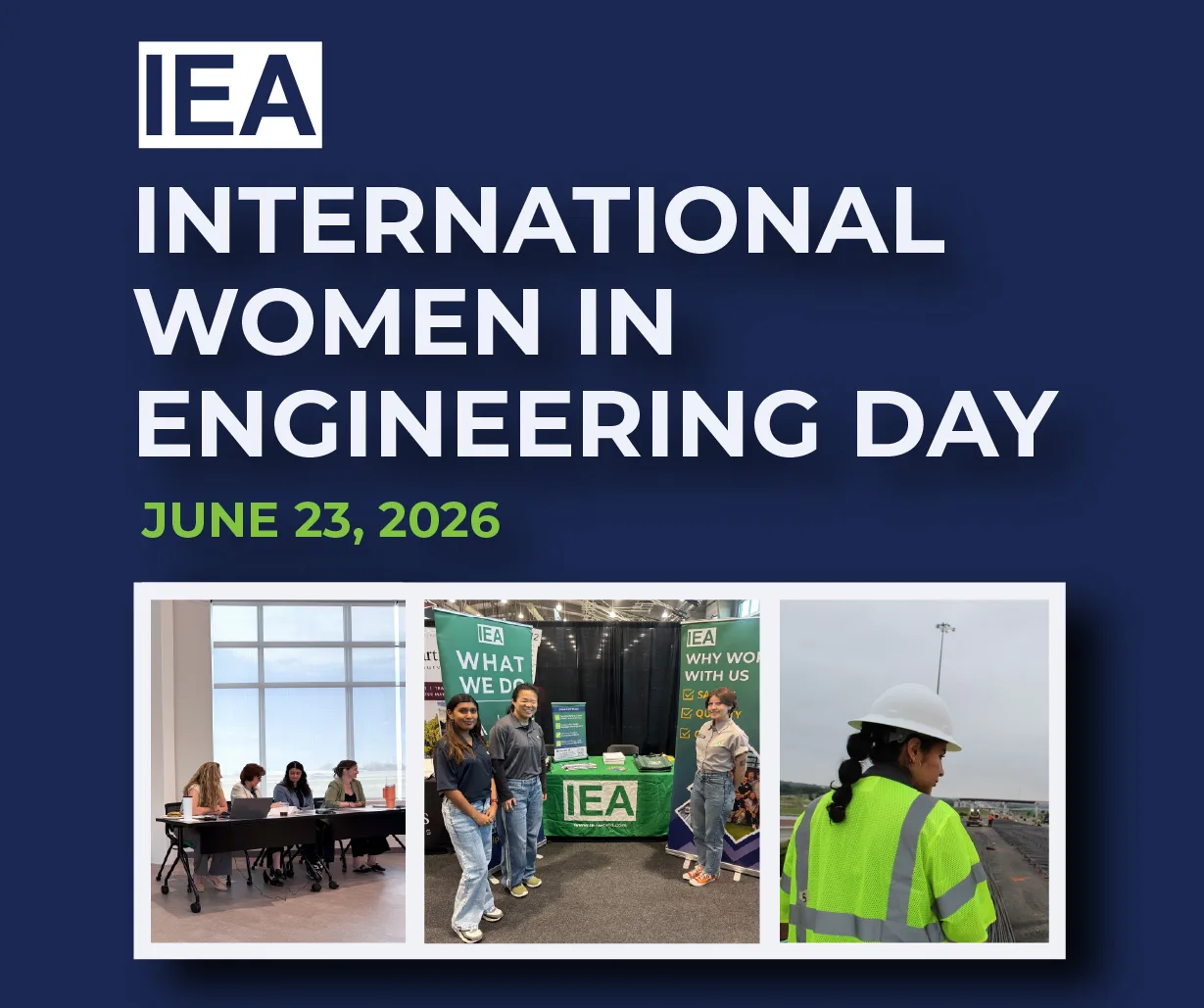
Engineering Intelligence: Building the Next Generation of Women Engineers
Celebrating International Women in Engineering Day
The strongest women in engineering are those who learn, grow, and help others do the same.
As we celebrate International Women in Engineering Day and this year’s theme, Engineering Intelligence, we are highlighting the women who continue to make an impact across IEA. Some began their careers here as interns. Others brought their talents to IEA through new opportunities.
Today, many serve as leaders and mentors, helping shape the future of our profession and the next generation of engineers.
Mentorship in Action
Engineering intelligence is not just about technical ability; it is also about how people learn from one another. The relationship between Deena Kamal, EIT, and AnnaMarie Tomczyk, PE, on the Dallas Roadway team is a clear example of this in practice.
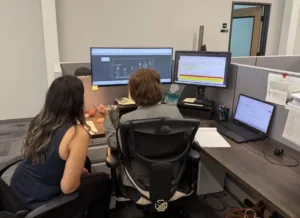 For AnnaMarie, the first couple of things that stood out about Deena was her initiative and technical ability. “She’s quick, she gets engineering, and she actually has a talent for 3D modeling,” AnnaMarie explained.
That willingness to learn and take initiative became an important part of their mentor-mentee dynamic. As AnnaMarie put it, “If you find someone who likes something, then give them projects they like, so they can hone their skills and become the subject matter experts.”
Their working relationship is built on communication just as much as technical skill. Deena shared that AnnaMarie has a way of explaining concepts visually and walking through problems until they make sense. “She’s really good at explaining it and drawing it out so you can visualize it,” explained Deena. “Sometimes it’s hard to visualize something in 3D when you’re not seeing it.”
That communication became especially important on the Chisholm Trail Parkway project, the first project AnnaMarie and Deena completed together from beginning to end. While AnnaMarie was responsible for roadway geometry, Deena was responsible for developing the 3D model. As alignments and profiles were created, Deena would build them into the 3D model, identify potential conflicts, and work alongside AnnaMarie to refine the design.
That approach to mentorship has had a lasting impact on Deena’s development as an engineer, shaping her technical skills and confidence in tackling complex challenges.
The impact of that mentorship is clear. “I definitely would not be where I am today if it wasn’t for AnnaMarie,” shared Deena. “I don’t think I would know as much as I do if I was learning under anyone else.”
Together, their dynamic reflects how engineering intelligence is built through collaboration, communication, and a shared commitment to learning.
As Deena continues to grow in her engineering career, AnnaMarie hopes one lesson stays with her: “Share it with the next person that comes along so that you will be a mentor yourself.”
Engineering Intelligence in Practice
As engineers grow in their technical careers, experience brings a perspective on how to navigate the engineering profession itself. For Hua Liu, PE, that problem-solving mindset shows up in the complexity of real-world projects.
The North Post Oak Shared Use Path (SUP) Bridge over IH 10 was one example of a real-world project that had many different avenues of involvement. As Hua explained, “bridging over an active interstate means your construction envelope is extremely constrained and there is zero tolerance for error.” From staging and alignment to utility coordination, the project had its fair share of conflicts.
Working above live traffic while meeting TxDOT requirements, METRO aesthetic standards, utility considerations, and accessibility needs required more than technical expertise alone. It required engineering judgement.
“Navigating it required constant communication between the design team, contractors, and TxDOT — and a lot of creative thinking about sequencing,” shared Hua.
The challenge was not simply designing a bridge, but understanding how each decision affected construction, stakeholders, and the experience of the local community members who would ultimately use and enjoy the SUP bridge.
When looking back on this accomplishment, Hua said that “getting that bridge built was a quiet victory I’m genuinely proud of.”
Where Careers Begin
Every engineer starts with a willingness to learn and a curious mind. For Brenda Chavez, EIT, and Manasi Kaluse, EIT, that journey began through IEA’s Aspire Internship Program. This was their opportunity to step into real-world projects, build technical skills, and understand what it meant to contribute as part of the team.
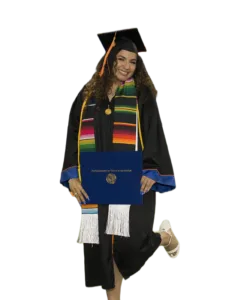
Brenda pointed to a mix of technical and soft skills that have stayed with her since those early days, sharing that “the skills I developed during my internship that I still use today are learning SUE (Subsurface Utility Engineering), communication, and teamwork.” Those fundamental skills continued to show up in how she works each day, whether that is coordinating with teams across different offices or designing culverts and storm sewer systems.
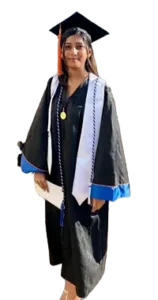
For Manasi, the shift from intern in the Aspire Internship Program to full-time engineer came down to responsibility. “The biggest adjustment was taking on more ownership and accountability for my work,” she explains. She moved from learning by observing to being directly responsible for project deliverables and timelines.
The stories shared here demonstrate that engineering intelligence is about more than technical expertise. From interns taking their first steps to mentors guiding future leaders, these women continue to strengthen our teams, projects, and profession.