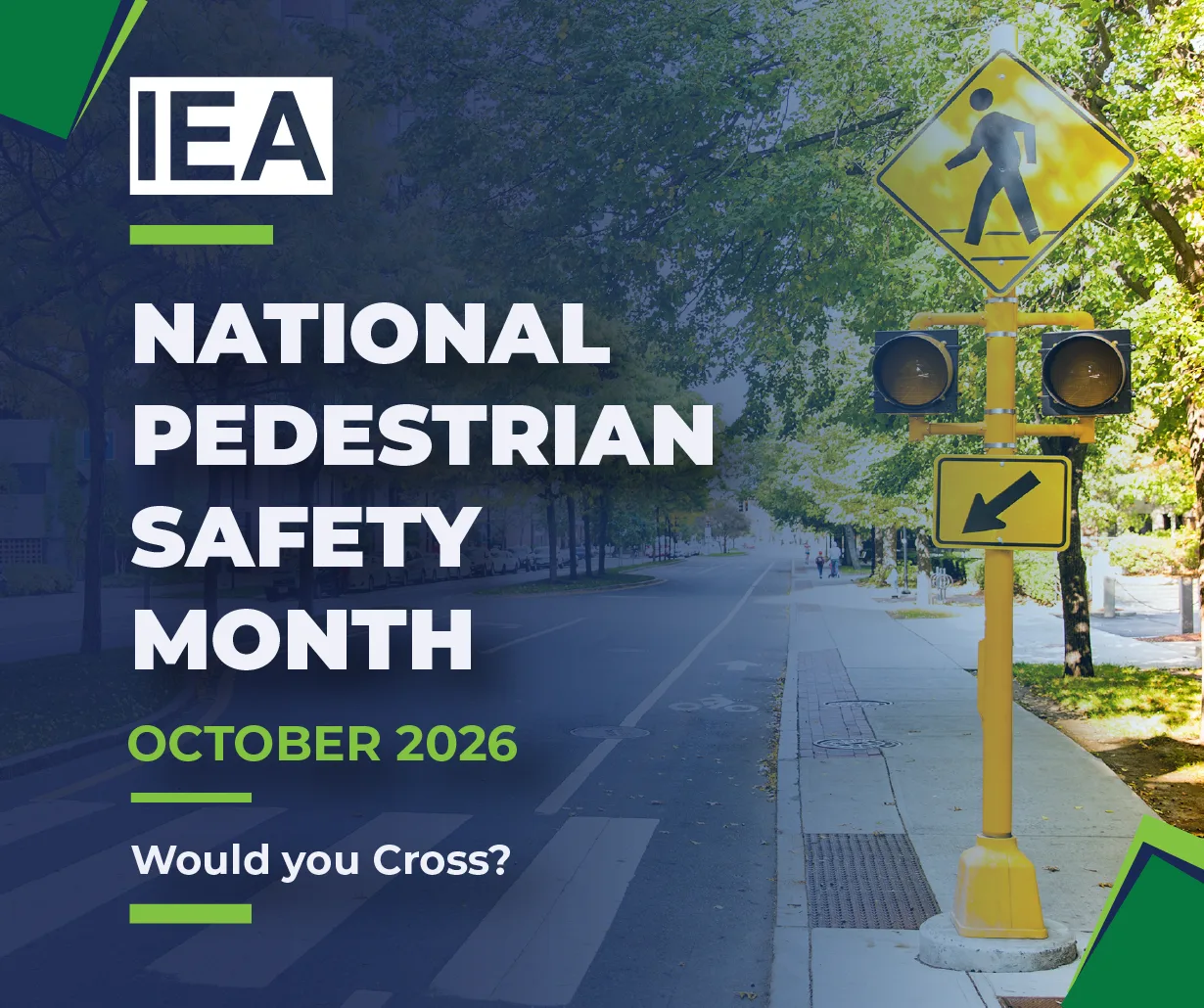
Would You Cross?
Spreading Awareness this Pedestrian Safety Month
You stand at the edge of a busy road. The nearest crossing is several hundred feet away. With no protection in sight, would you cross? Now imagine the same roadway, but with a clearly marked crosswalk, flashing pedestrian signals, and curb extensions. Crossing that road is no longer as risky as it was before because the infrastructure around it was designed for your safety.
For residents of the Woodlake subdivision in Carrollton, Texas, safer pedestrian connections were needed. IEA served as the prime consultant for the reconstruction of four streets and three alleys in the subdivision, addressing damaged infrastructure and unsafe pedestrian conditions. Before these improvements, pedestrians were tempted to cross a high-speed, major arterial road without the use of crosswalks or signals.
“As an engineer and a father, I see pedestrian safety as much more than a design requirement. It’s about creating neighborhoods where families feel comfortable walking, kids can safely explore, and neighbors have opportunities to connect. Those everyday experiences make our communities healthier, happier, and better places to live,” said Greg Peters, PE, Municipal Practice Lead.
The Woodlake project included new ADA-compliant sidewalks, ramps, and crosswalks that guide pedestrians toward a safer, signalized intersection. These improvements provide a safer way to cross the roadway while helping connect the surrounding community.
“Today, pedestrians are redirected to a safer intersection where they can cross instead, reducing the risks people took to traverse the community previously,” said Justin Toone, PE, RAS, ENV SP, LGPP, Project Manager.
Even with a safer design, infrastructure isn’t the only layer of protection. Everyone using the road must do their part too. Drivers should remain focused, alert, and safe on the road by following the posted signs and signals on their commutes. Likewise, pedestrians should opt to use designated crossings and make themselves visible during darker hours. When roadway design and pedestrian safety work together as they did in the Woodlake project, our neighborhoods become safer for everyone.
October is recognized as National Pedestrian Safety Month and observed by the U.S. Department of Transportation’s National Highway Traffic Safety Administration (NHTSA) every year. It serves as a time to remind commuters that keeping pedestrians safe is a shared responsibility, especially at this time of year when daylight hours become shorter, decreasing visibility, and increasing risks for both drivers and pedestrians. Throughout the month, NHTSA encourages communities to form pedestrian safety coalitions, encouraging advocacy and change in their neighborhoods.
Likewise, TxDOT hosts a year-round Pedestrian Safety Campaign that strongly encourages everyone in any form of commute to stay alert and stop for pedestrians, stating that, “No matter how you travel, following laws helps keep everyone safe.”
This Pedestrian Safety Month, look closer at the roads you travel and think about the design choices made. Whether you’re driving, walking, or taking public transit, the infrastructure that allows us to do so helps keep us safe when everyone plays their roles correctly. The next time you’re at a crosswalk, ask yourself: Would you cross here?